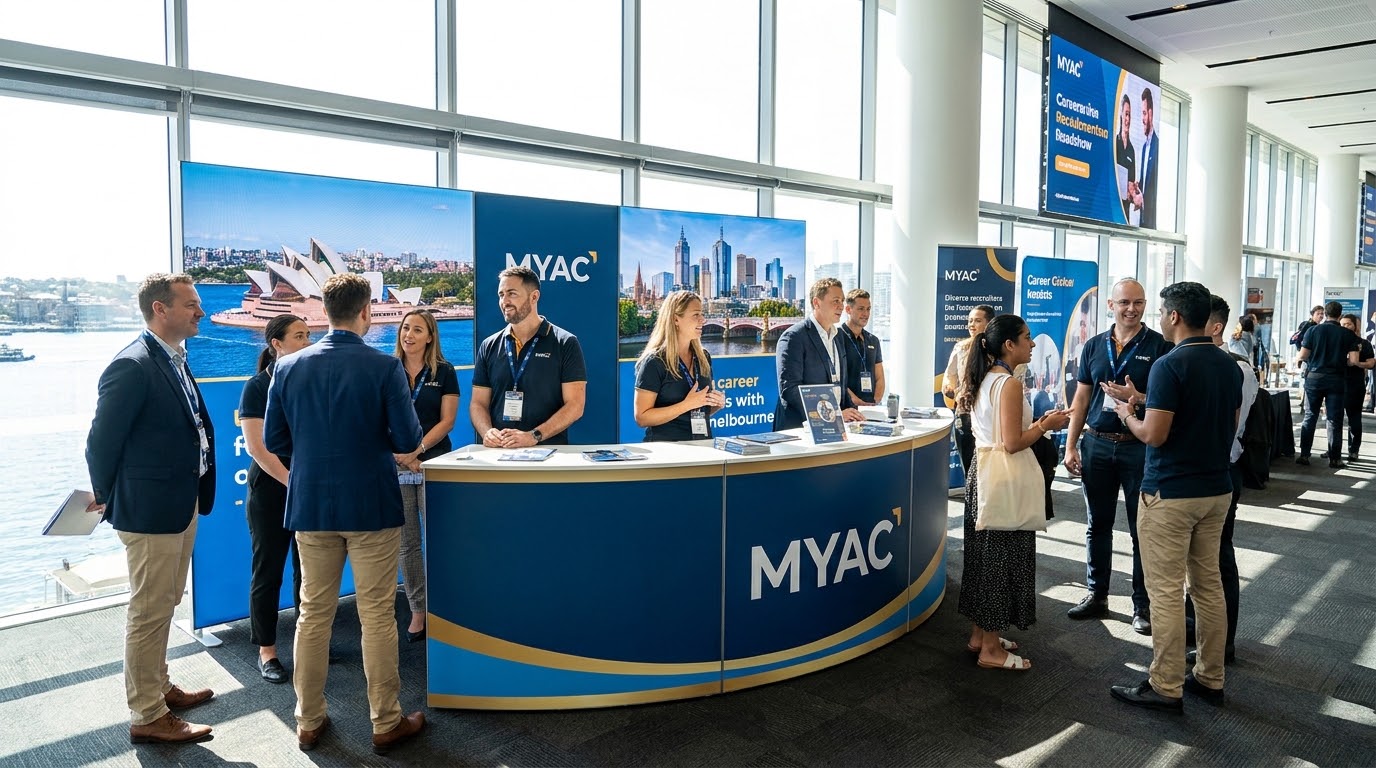
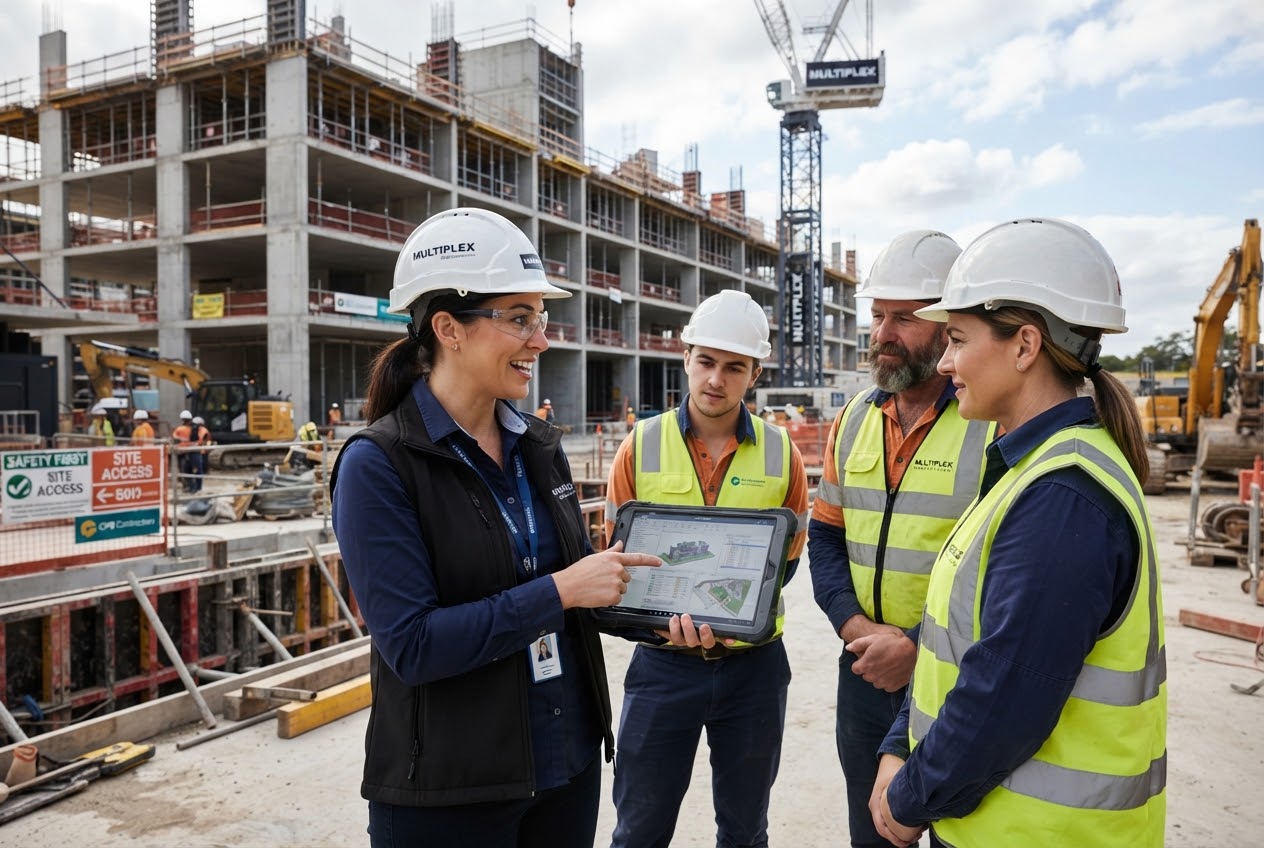
When a business needs to fill several skilled roles at once — and can’t realistically fill them from the local labour market — the usual alternative is a slow drip of individual virtual interviews, run across time zones, over weeks or months. A recruitment roadshow replaces that with a structured, in-person event, held in the market where MYAC’s candidate networks are strongest.
It’s a model built for volume hiring under time pressure — a hospitality group opening several new venues, an aged care provider filling a chronic staffing gap across multiple sites, an engineering or trades employer that needs five or ten skilled hires in a quarter.
Australia’s skilled labour shortage is most acute in exactly the sectors where roadshows do the most good: hospitality, aged care, trades. Roadshows solve the efficiency problem directly — MYAC does the sourcing and screening work upfront, so the event is structured entirely around decision-making, not discovery.
Understanding exactly which roles need filling, how many, and over what timeframe.
Scheduled where MYAC’s international networks and in-country teams are established.
Sourced and screened well before the event itself.
structured, back-to-back interviews or practical assessment, all in a single concentrated session.
MYAC’s migration team already working in parallel, so eligibility questions are answered before an offer is extended.
Onboarding and ongoing engagement carry through exactly as for any other placement.
Employers considering large-scale international hiring generally look at: running individual recruitment processes (slow); engaging multiple overseas agencies (fast, but no screening rigour or migration accountability); or managing sourcing directly
(starting from zero). A structured roadshow avoids all three problems at once.
A single international hire can survive some inefficiency in the process. Ten or twenty simultaneous hires can't absorb that same inefficiency ten or twenty times over. Roadshows work because sourcing, screening and migration workstreams run in parallel from day one, under one organisation.
Chefs, kitchen teams, front-of-house and hotel management roles.
Support workers, carers and clinical roles
Technicians, tradespeople and engineers
New sites, new contracts, a step-change in headcount.